Complete Guide to Facility Management Software and Best Practices for Effective Operations
Facility management coordinates the people, places, processes, and assets that keep buildings and operations safe, productive, and cost-effective. This guide explains what facility management means, how it improves business efficiency, and why modern organizations treat facilities as strategic assets rather than just overhead. You will learn the different types of facility management, proven best practices for preventive and sustainable operations, and how software such as CMMS and EAM systems automates work orders, scheduling, and compliance. The article also walks through key software features, measurable benefits and ROI, and a practical checklist for choosing and implementing the right facility management system. By the end, facility leaders and operations teams will have actionable steps to reduce downtime, extend asset life, and align maintenance with business goals using data-driven processes and integrated tools.
What is Facility Management and Why is it Essential?
Facility management is the integrated practice of maintaining buildings, assets, and services to support organizational objectives, safety, and operational continuity. It works by coordinating maintenance management, space planning, vendor services, and compliance activities so assets deliver reliable performance and occupants remain productive. The specific benefits include reduced downtime, improved safety, and controlled lifecycle costs, which together protect revenue and reputation. Facility management involves stakeholders from maintenance technicians to facility managers and executives, each contributing to asset decisions and operational priorities. Understanding this scope leads directly to how facility management drives measurable business efficiency through targeted practices and KPIs.
How Does Facility Management Impact Business Efficiency?
Facility management improves business efficiency by lowering unplanned downtime, optimizing space use, and ensuring regulatory compliance, which directly affects productivity and costs. For example, preventive maintenance reduces mean time to repair (MTTR) and increases asset availability, improving overall equipment effectiveness (OEE) in asset-intensive operations. Key performance indicators influenced by facility management include MTTR, preventive maintenance ratio, backlog hours, and cost per maintenance hour, which give leaders actionable metrics to prioritize work. Facility management also enables better space utilization and reduces lease or energy expenses through consolidation and energy-efficiency projects. These efficiency gains then shape choices about service delivery models and technology adoption to sustain continuous improvement.
What Are the Different Types of Facility Management?
Facility management spans distinct categories—operational versus strategic, hard versus soft services, and in-house versus outsourced delivery—each serving different organizational needs. Operational facility management focuses on day-to-day functions like HVAC maintenance and janitorial services, while strategic facility management plans asset lifecycle, capital projects, and sustainability initiatives. Hard services include mechanical, electrical, and structural maintenance, and soft services cover cleaning, security, and reception. Industry context matters: healthcare facilities emphasize compliance and infection control, manufacturing prioritizes uptime and safety, and commercial real estate centers on tenant experience and space optimization. Recognizing these categories helps managers align resources and technology to the right mix of services and outcomes.
How Do Operational and Strategic Facility Management Differ?
Operational facility management centers on immediate tasks—work orders, reactive repairs, and routine inspections—to keep systems functioning and occupants safe. It relies on clear workflows, timely response, and tactical scheduling to maintain uptime and service levels. Strategic facility management, by contrast, addresses long-term planning: capital budgeting, asset lifecycle optimization, and sustainability targets that reduce total cost of ownership over years. Strategic decisions use data from operational activities—failure trends, repair histories, and utilization metrics—to prioritize investments and reduce risk. Understanding this distinction helps organizations balance short-term responsiveness with long-term value creation when designing maintenance and asset programs.
What Are Common Facility Management Services and Functions?
Facility management services include maintenance planning, custodial services, security, space management, vendor coordination, and compliance auditing, each delivering specific operational outcomes. Maintenance covers preventive, corrective, and predictive activities that keep MEP systems and equipment reliable, while custodial services maintain cleanliness and occupant comfort. Security and access control preserve safety and asset protection, and space planning optimizes utilization to lower occupancy costs. Vendor and contract management ensure outsourced services meet SLAs and costs remain predictable. These functions collectively support business continuity and stakeholder satisfaction, and they naturally lead to questions about how best practices and technology support execution.
What Are the Best Practices in Facility Management?
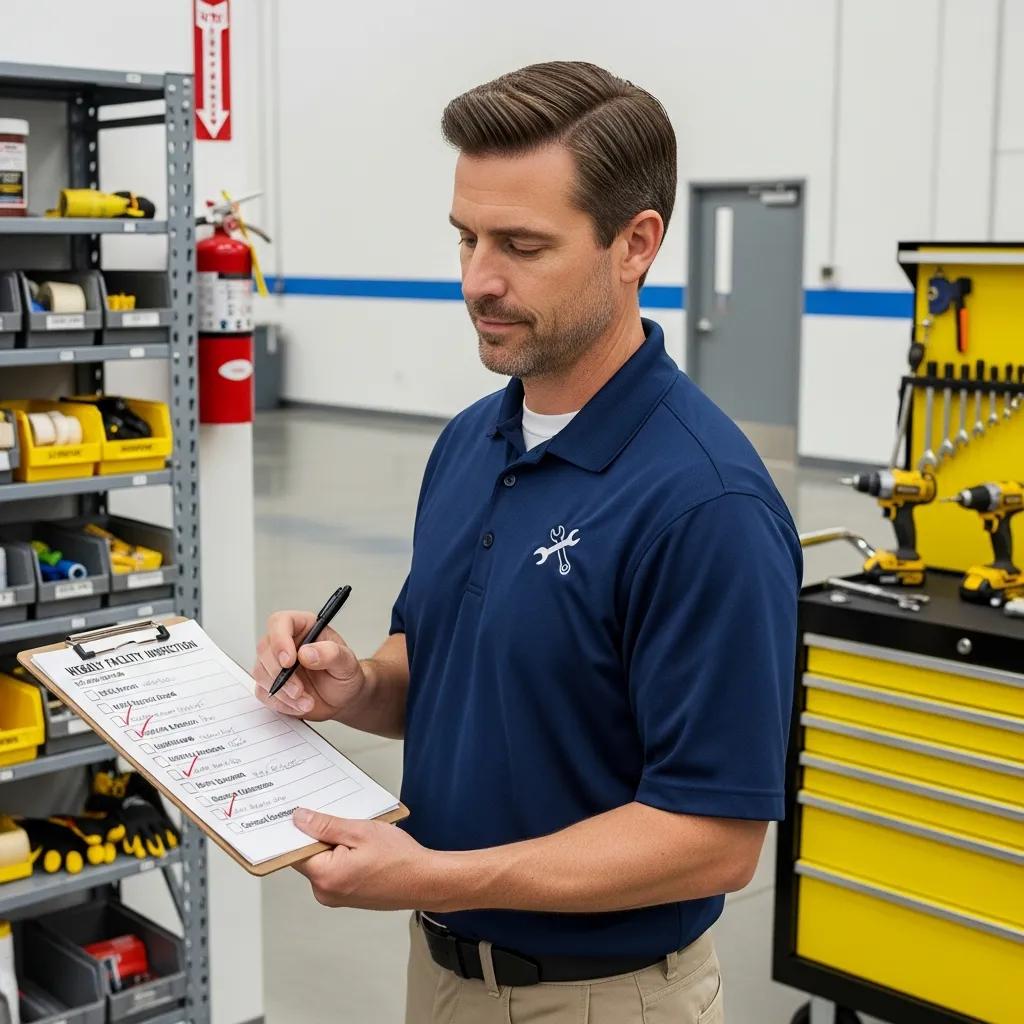
Best practices in facility management emphasize proactive maintenance, data-driven decision-making, standardized processes, and continuous staff training to maximize asset performance and compliance. Establishing a preventive maintenance program, using KPIs to track performance, and documenting procedures reduces variability and reactive spending. Standardization of workflows and consistent documentation ensure knowledge retention and easier onboarding, while training empowers technicians to follow diagnostics and safety protocols. Integrating sustainability targets into procurement and operations lowers energy and lifecycle costs. Implementing these practices creates a capability loop—better data enables better planning—which sets the stage for using digital tools to automate and scale those improvements.
How to Implement Preventive Maintenance Effectively?
Implementing preventive maintenance starts with a complete asset inventory and criticality ranking to prioritize work on assets that would disrupt operations if they failed. Next, set scheduling cadences and triggers based on manufacturer guidance, usage, and failure history, and create standard work procedures for each preventive task to ensure consistent execution. Track completion, condition, and costs in a centralized system to analyze trends and refine schedules; this analytics-driven loop shifts maintenance from reactive to predictive over time. Training and clear communication between planners and technicians are essential to close work orders efficiently and capture accurate history. These steps naturally depend on digital tools to manage schedules and measure performance.
What Are Strategies for Sustainable and Cost-Effective Facility Management?
Sustainable facility management focuses on energy monitoring, resource optimization, and lifecycle procurement strategies that lower operational costs and environmental impact. Implement energy metering and IoT sensors to identify inefficiencies and target retrofits that deliver quick paybacks, such as lighting or HVAC controls. Adopt lifecycle cost analysis in procurement decisions to balance upfront costs with long-term maintenance and disposal impacts. Consolidating vendors and standardizing spare parts reduce complexity and inventory holding costs while improving supplier performance. Tracking sustainability KPIs—energy per square foot, waste diversion, and carbon footprint—supports reporting and continuous improvement. These strategies link directly to selecting appropriate software and integrations to measure and manage outcomes.
How Does Facility Management Software Enhance Operations?
Facility management software like CMMS and EAM centralizes asset data, automates work order workflows, and provides analytics that reduce downtime and optimize labor, inventory, and compliance. By maintaining a single asset registry and work history, software shortens diagnosis time and improves decision-making about repairs versus replacement. Integration with IoT, BIM, and enterprise systems enables condition-based triggers and more accurate capital planning. Below is a mapping of core software features to operational attributes and expected outcomes to show how digital tools translate into measurable improvements.
| Feature Category | Operational Attribute | Typical Outcome |
|---|---|---|
| Work Order Automation | Faster dispatch and tracking | 30% faster response time |
| Asset Registry | Centralized lifecycle history | Improved repair accuracy |
| Preventive Scheduling | Reduced reactive tasks | Higher preventive maintenance ratio |
| Inventory Management | Spare parts availability | Lower emergency procurement costs |
Micromain offers maintenance management software that exemplifies these capabilities as a practical example of how CMMS tools centralize work orders and asset history to drive uptime and compliance improvements. Mentioning a vendor example helps illustrate how organizations apply these features in real operations while keeping the focus on the topic of software-enabled improvements.
What Are the Key Features of Facility Management and CMMS Software?
Key CMMS features include an asset registry, work order workflows, preventive maintenance scheduling, spare-parts inventory, and performance reporting that together streamline maintenance execution and decision-making. An asset registry provides entity → relationship → attribute context by linking assets to locations, warranties, and maintenance histories. Work order workflows automate assignment, escalation, and closure to reduce administrative overhead and improve accountability. Preventive maintenance modules schedule recurring tasks and generate triggers based on time, usage, or condition, increasing preventive maintenance ratios. Below is a comparative EAV table showing feature categories and their direct value drivers.
| Feature | Attribute | Value Driver |
|---|---|---|
| Asset Management | Centralized records | Faster troubleshooting, extended asset life |
| Work Orders | Automated workflows | Reduced administrative time, improved response |
| Preventive Maintenance | Scheduling & triggers | Higher uptime, fewer emergency repairs |
| Inventory | Parts tracking | Lower stockouts, reduced emergency purchases |
How Do EAM Software Solutions Integrate with Facility Management?
Enterprise Asset Management (EAM) systems extend CMMS capabilities by connecting maintenance to procurement, finance, and capital planning for larger, enterprise-grade operations. CMMS is often suitable for facility-level maintenance, providing essential work order and inventory control, while EAM handles complex asset lifecycles, multi-site rollups, and deeper ERP integrations. Common integration points include ERP for financials, IoT platforms for condition-based triggers, and BIM for spatial context, enabling entity → relationship → outcome insights across systems. Organizations choose EAM when they require advanced planning, regulatory reporting, and centralized governance across large portfolios, while smaller operations may achieve most benefits from a robust CMMS.
The power of EAM systems is further amplified through their ability to integrate with advanced technologies like BIM and IoT, creating a more comprehensive and intelligent facility management ecosystem.
BIM, IoT, and EAM for Enhanced Facility Management
This paper focuses on the integration of BIM and IOT to enhance building performance and facility management. The system integrates IoT data from sensors and devices or with other software systems [37], such as enterprise asset management (EAM) systems.
BIM maintenance system with IoT integration: enhancing Building performance and facility management, A Ehab, 2024
What Are the Benefits of Using CMMS and EAM Software in Facility Management?
CMMS and EAM software produce quantifiable benefits such as reduced downtime, longer asset life, optimized labor, and simplified compliance reporting that together improve operational resilience and reduce total cost of ownership. Centralized maintenance history supports better repair vs replace analysis, and automation reduces time spent on manual scheduling and paperwork. Improved inventory controls reduce emergency purchases and stockouts, while analytics uncover failure patterns enabling predictive maintenance. These benefits translate into measurable KPI improvements—lower MTTR, higher preventive maintenance ratios, and reduced maintenance spend as a percent of asset value—that make the business case for investment.
Understanding the potential return on investment is crucial, and models exist to help facility managers estimate the economic efficiency of implementing such IT systems.
Facility Management IT Implementation & ROI
Now the size of the achievable ROI can be depicted in a diagram over time. The model can now assist the facility manager in estimating the economic efficiency of using a CAFM system.
Successful IT implementation in facility management, T Madritsch, 2009
How Does CMMS Software Improve Maintenance and Asset Management?
CMMS improves maintenance by automating the lifecycle from fault detection through work order creation, dispatch, completion, and history retention, enabling faster resolution and better root-cause analysis. Centralized asset history supports data-driven decisions about repairs versus replacement and informs capital planning by revealing recurring failure modes and costs. Inventory and spare parts optimization minimize downtime by ensuring critical spares are available while reducing carrying costs. As a result, organizations typically see improvements in MTTR, preventive-to-reactive work ratios, and backlog reduction, which together increase asset availability and operational predictability.
What ROI Can Organizations Expect from Facility Management Software?
ROI from facility management software typically stems from reduced downtime, labor efficiency, parts optimization, and better capital planning, with representative ranges varying by industry and baseline maturity. Common ROI categories include downtime reduction (often 10–30% in mature deployments), labor savings via automation (10–25%), and parts cost reductions through inventory controls (5–15%). The table below presents representative ROI drivers, attributes to measure, and sample impact ranges to help set realistic expectations.
| ROI Driver | Measured Attribute | Representative Impact |
|---|---|---|
| Downtime Reduction | Asset availability | 10–30% less unplanned downtime |
| Labor Efficiency | Work order processing time | 15–25% faster throughput |
| Parts Optimization | Inventory carrying cost | 5–15% cost reduction |
| Compliance & Reporting | Audit time and fines | Lower risk and faster audits |
How to Choose the Right Facility Management Software for Your Organization?
Choosing the right facility management software requires a clear requirements definition, vendor evaluation across features and integrations, and a practical implementation plan that includes change management and KPIs. Start by documenting assets, users, required integrations (ERP, IoT, BIM), compliance needs, and reporting requirements to create a prioritized feature list. Evaluate vendors for scalability, integration capabilities, support, and total cost of ownership rather than price alone. Plan implementation in phases—pilot, scale, and measure—to build user confidence and validate ROI. The checklist below provides a concise selection framework to guide procurement and ensure the chosen solution aligns with operational goals.
- Define Requirements: List assets, users, integrations, and compliance needs.
- Assess Feature Fit: Score vendors on work orders, preventive maintenance, inventory, and reporting.
- Check Integrations: Confirm ERP, IoT, and BIM connectivity where needed.
- Evaluate Support & TCO: Review SLAs, training, and long-term costs.
- Plan Adoption: Pilot with clear KPIs, then scale with training and governance.
This checklist helps procurement teams structure evaluations and leads into implementation tactics that drive user adoption and measurable outcomes.
What Criteria Should Be Considered When Evaluating Software Solutions?
When evaluating software, prioritize feature fit and customization, integration compatibility with existing systems, security and data governance, vendor support and SLAs, and the total cost of ownership that includes implementation and ongoing maintenance. Feature fit ensures the system supports your workflows, while integration capability lets you leverage existing data from ERP or IoT sensors for condition-based maintenance. Security and compliance are non-negotiable for regulated industries, and vendor responsiveness affects uptime and training success. A scoring rubric that weights these criteria helps procurement compare options objectively. These evaluation criteria feed directly into a phased rollout plan to ensure successful adoption.
How to Ensure Successful Implementation and User Adoption?
Successful implementation uses a phased pilot → scale → measure approach combined with role-based training, data governance, and executive sponsorship to sustain momentum and deliver outcomes. Begin with a limited pilot on a critical asset group to validate configuration, workflows, and KPIs, then refine before wider rollout. Provide hands-on training and clear standard operating procedures for technicians and planners to ensure consistent use. Establish data quality rules and governance to maintain reliable asset and work order records, and monitor KPIs such as work order close time and preventive maintenance compliance to demonstrate value. These steps create the organizational change necessary to embed the software into daily operations.
Indeed, the ultimate success of any CMMS implementation hinges significantly on how users perceive and accept the system post-deployment.
CMMS User Acceptance & Post-Implementation Success
This paper briefly describes a study designed to examine post-implementation perception and acceptance of CMMS by users. The primary assumptions of the study are that the success of CMMS implementation is dependent on the users’ perception and acceptance of the system after it has been implemented.
Technology adoption: A study on post-implementation perceptions and acceptance of computerised maintenance management systems, JE Amadi-Echendu, 2015
Conclusion
Implementing effective facility management practices and software can significantly enhance operational efficiency, reduce costs, and extend asset life. By leveraging data-driven insights and automation, organizations can achieve measurable improvements in maintenance and compliance. To explore how these solutions can transform your facility management approach, consider reviewing our comprehensive software options. Start optimizing your operations today for a more sustainable and productive future.