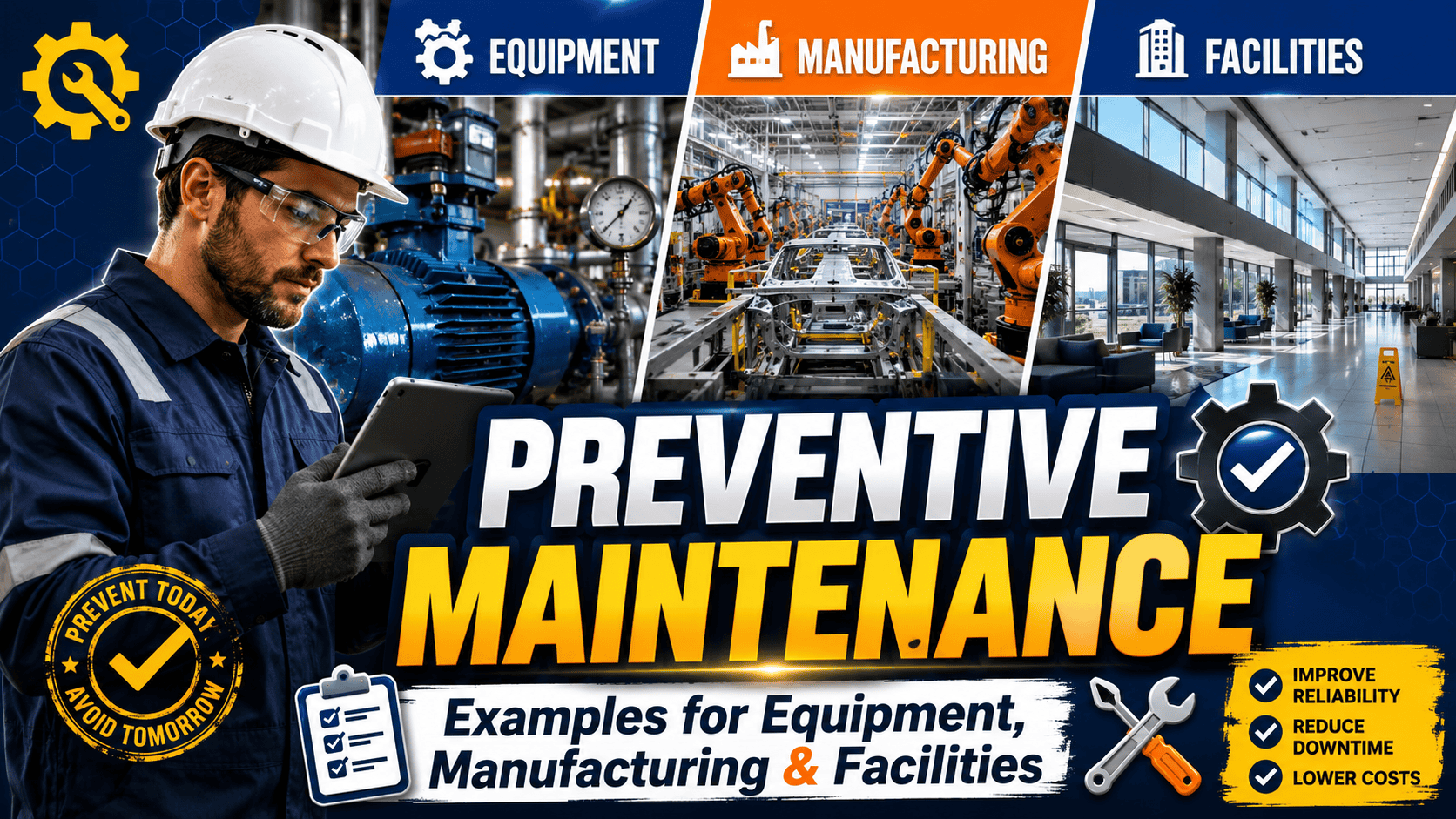
Preventive Maintenance Examples for Equipment, Manufacturing, and Facilities
Preventive maintenance examples help maintenance teams turn broad reliability goals into specific work orders that can be scheduled, assigned, completed, and documented. In practice, a preventive maintenance task may include inspection, cleaning, lubrication, calibration, adjustment, safety checks, planned part replacement, or a performance review completed before failure occurs.
The most useful PM examples are specific to the asset, operating environment, safety requirements, and manufacturer recommendations. As a result, a strong PM task tells the technician what to inspect, what condition is acceptable, what action to take, and what information to document.
This guide gives practical preventive maintenance examples for manufacturing equipment, facility systems, mobile assets, utilities, and common rotating equipment. It also includes checklist examples, sample work order language, frequency guidance, and tips for managing PM tasks in a CMMS.
Quick answer
Common preventive maintenance examples include inspecting conveyor belts, replacing HVAC filters, lubricating bearings, checking pump seals, testing emergency lighting, reviewing forklift safety devices, cleaning coils, and documenting generator test runs. Overall, good PM tasks are repeatable, measurable, asset-specific, safety-aware, and easy for technicians to complete consistently.
What Is a Preventive Maintenance Example?
A preventive maintenance example is a repeatable maintenance activity performed on a schedule or trigger to help keep an asset in working condition. Typically, preventive maintenance is planned around time intervals, meter readings, operating hours, inspections, or condition indicators.
For example, a simple conveyor PM task might say: inspect Conveyor 3 belt tension every month, record belt condition, adjust tension if it is outside the approved range, and create a corrective work order if cracking, fraying, rubbing, or misalignment is found.
However, preventive maintenance should be adapted to the equipment manual, duty cycle, environment, safety risk, production impact, and maintenance history. Otherwise, a PM copied from another site may be too frequent, too vague, or missing important safety and documentation steps.
Preventive Maintenance vs. Corrective Maintenance
Before building PM tasks, it helps to separate preventive, corrective, and reactive work. Although these terms are related, each one describes a different maintenance response.
| Maintenance type | What it means | Example |
|---|---|---|
| Preventive maintenance | Planned work performed before a failure or visible breakdown. | Inspect a pump coupling every month and document vibration, leaks, and bearing temperature. |
| Corrective maintenance | Repair work performed after a fault, failed inspection, or reported problem is found. | Replace a leaking pump seal after the PM inspection identifies the defect. |
| Reactive maintenance | Unplanned repair work performed after an asset stops working or creates an urgent issue. | Repair a conveyor after a belt fails during production. |
Preventive Maintenance Examples by Asset Type
Different assets need different PM instructions. Therefore, the examples below connect common asset types with practical tasks and the documentation technicians should capture.
| Asset or system | Preventive maintenance examples | Typical documentation |
|---|---|---|
| Conveyors | Inspect belts, rollers, guards, tension, tracking, motor mounts, transfer points, and abnormal noise. Then remove debris from accessible areas. | Belt condition, defects found, adjustments made, photos, follow-up work order number. |
| Pumps | Check seals, leaks, coupling alignment, vibration, bearing temperature, lubrication condition, and operating readings. | Pressure, temperature, vibration notes, leak status, lubrication action. |
| Motors | Inspect mounting, temperature, vibration, electrical connections, ventilation, and signs of overheating. | Temperature reading, vibration trend, visible damage, corrective action. |
| HVAC units | Inspect or replace filters, check belts, coils, drains, thermostat operation, refrigerant indicators, and unusual noise. | Filter condition, drain status, belt condition, unit readings. |
| Forklifts or fleet assets | Inspect tires, forks, brakes, lights, horn, fluids, leaks, battery or fuel system, and safety devices. | Pass or fail result, defects, safety concerns, service notes. |
| Generators | Check oil, coolant, battery, belts, hoses, fuel level, alarms, leaks, and test-run documentation. | Run time, voltage or load notes, fluid levels, alarm status. |
Preventive Maintenance Examples for Manufacturing
Manufacturing preventive maintenance often focuses on production equipment, material-handling assets, utilities, safety systems, and machines that can interrupt throughput when they fail. For this reason, PM tasks should be realistic for production windows and clear enough for repeatable completion.
The purpose is not to add more PM tasks just to look busy. Instead, the goal is to create useful maintenance work that reduces avoidable interruptions, identifies early defects, protects workers, and supports consistent documentation.
| Manufacturing asset | Example PM task | Escalation trigger |
|---|---|---|
| Conveyor line | Inspect belt tracking, belt tension, roller condition, guarding, motor mounts, transfer points, and signs of rubbing or buildup. | Cracked belt, missing guard, abnormal noise, repeated tracking adjustment, damaged roller. |
| Packaging equipment | Inspect sensors, guards, belts, chains, fasteners, lubrication points, product-contact areas, and changeover components. | Failed sensor, missing fastener, guard issue, product buildup, unusual vibration. |
| CNC or production machine | Inspect coolant level, filters, lubrication systems, ways, tool holders, alarms, and housekeeping condition. | Low coolant, blocked filter, lubrication alarm, recurring machine alarm, visible leak. |
| Compressed air system | Check oil level, filters, belts, drains, pressure readings, leaks, and unusual noise. | Pressure drop, active leak, oil contamination, high temperature, abnormal noise. |
| Industrial fan or blower | Inspect belt condition, guards, vibration, bearing temperature, alignment indicators, fasteners, and buildup on accessible surfaces. | Elevated vibration, loose mounting, damaged belt, hot bearing, missing guard. |
Manufacturing PM Example: Conveyor Inspection
- Asset: Conveyor 3, packaging line.
- Frequency: Monthly or according to operating-hour trigger.
- Tasks: Inspect belt tracking, belt tension, roller condition, guarding, motor mounts, transfer points, and signs of rubbing or buildup.
- Record: Note belt condition, adjustment made, abnormal noise, photos of defects, and downtime required for follow-up work.
- Create a corrective work order when: belt cracking, fraying, missing guarding, repeated misalignment, damaged rollers, or unsafe conditions are found.
Manufacturing PM Example: Pump and Motor Review
- Asset: Process pump and drive motor.
- Tasks: Check vibration, leaks, bearing temperature, coupling condition, lubrication, fasteners, and operating readings.
- Record: Capture vibration observation, visible leak status, temperature reading, lubrication action, operating pressure, and follow-up notes.
- Escalate when: a reading is outside the approved range, a seal leak is present, fasteners are loose, coupling damage is visible, or operating conditions have changed.
Preventive Maintenance Examples for Facilities
Facility preventive maintenance often focuses on building systems, occupant comfort, life-safety support, energy performance, service continuity, and inspection documentation. In addition, PM tasks should reflect facility type, regulatory needs, manufacturer guidance, and internal service expectations.
For facilities teams, a well-written PM task should clearly identify the location, access needs, safety steps, documentation requirements, and follow-up workflow when a deficiency is found. This makes each inspection easier to complete and easier to review later.
| Facility system | Example PM tasks | Documentation needs |
|---|---|---|
| HVAC units | Replace or inspect filters, check belts, coils, drains, thermostat operation, refrigerant indicators, and unusual noise. | Filter date, unit condition, belt condition, drain status, readings, follow-up work. |
| Lighting | Inspect emergency lighting, replace failed lamps, test controls, and verify critical-area lighting performance. | Pass or fail result, failed fixtures, repair work order, inspection date. |
| Doors and access points | Inspect hinges, closers, locks, seals, access controls, and safety hardware. | Door ID, hardware condition, access issue, safety concern, repair need. |
| Plumbing | Inspect leaks, valves, drains, pumps, water heaters, strainers, and visible corrosion. | Leak status, corrosion notes, valve condition, location, photos. |
| Fire and life safety | Verify inspection records, check accessible devices, review alarms or deficiencies, and coordinate required service work. | Inspection records, deficiency notes, vendor service status, follow-up tasks. |
| Roof and exterior | Inspect drains, flashing, penetrations, visible damage, ponding water, and debris buildup. | Condition notes, photos, water intrusion risk, repair request. |
Facilities PM Example: HVAC Filter and Drain Check
- First, inspect or replace filters according to the approved schedule.
- Next, check drain pans and condensate lines for standing water, blockage, or visible biological growth.
- Then review belt condition and accessible coil condition.
- After that, document unusual noise, vibration, access issues, and parts used.
- Finally, create a corrective work order if the unit needs cleaning, repair, belt replacement, or additional troubleshooting.
Facilities PM Example: Emergency Lighting Test
- Test the fixture according to the facility procedure.
- Then record pass or fail status, location, fixture ID, and inspection date.
- Also note failed lamps, battery issues, missing labels, or access concerns.
- Finally, create a follow-up work order for repair or replacement when a unit fails.
Equipment-Specific Preventive Maintenance Checklist Examples
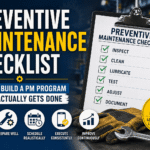
Preventive maintenance checklist examples are most useful when they are specific enough to guide the technician without becoming too long to complete. Ideally, the checklist should include the asset, task, acceptable condition, documentation requirement, and escalation trigger.
| Checklist item | Acceptable condition or action | Record in work order |
|---|---|---|
| Safety controls checked | Guards, interlocks, emergency stops, labels, and accessible safety devices are present and functioning according to procedure. | Pass or fail, issue found, corrective work order. |
| Lubrication completed | Lubricant type and amount match approved instruction. In addition, no over-lubrication or contamination is noted. | Lubricant used, quantity, date, abnormal condition. |
| Temperature reviewed | Reading is within approved operating range or consistent with baseline trend. | Reading, location, trend concern, follow-up action. |
| Vibration or noise reviewed | No abnormal vibration, grinding, rattling, or rubbing is present. | Observation, reading if available, defect note. |
| Leaks inspected | No active leaks, stains, pooling, or visible corrosion around seals, hoses, valves, or connections. | Leak status, photo, affected component. |
| Housekeeping complete | Asset and access area are clean enough for safe operation and inspection. | Condition, debris removed, access issue. |
Sample Preventive Maintenance Work Order
Example work order language
Title: Monthly PM – Conveyor 3 inspection.
Asset: Conveyor 3, packaging line.
Instructions: Lock out equipment according to site procedure when required. Next, inspect belt tracking, belt tension, rollers, guards, transfer points, motor mounts, fasteners, and signs of rubbing or buildup. Then clean accessible debris and record belt condition, including any adjustment made.
Completion fields: Pass or fail, belt condition, abnormal noise, adjustment made, photos, parts used, follow-up work order required.
Escalation: Create corrective work order for cracked belt, missing guard, damaged roller, repeated tracking issue, visible rubbing, or unsafe condition.
How to Write Better Preventive Maintenance Tasks
A preventive maintenance example is only useful if it can be executed consistently. For instance, vague tasks like check machine or inspect HVAC do not give technicians enough direction and make reporting harder.
To improve consistency, write PM instructions that explain the action, expected condition, documentation requirement, and next step when something is wrong.
- Name the specific asset, system, or location.
- State the exact action, such as inspect, clean, lubricate, test, calibrate, replace, or record.
- Include acceptable conditions or measurement ranges when they are known and approved.
- List required parts, tools, safety steps, access needs, or shutdown requirements.
- Tell the technician what to document, such as readings, condition, pass or fail result, photos, or notes.
- Define what should trigger a corrective work order or escalation.
- Finally, review frequency periodically so PMs do not become outdated, duplicated, or unnecessary.
PM Task Template
| Field | Example entry |
|---|---|
| Asset or location | AHU-2, roof level, east wing |
| Frequency or trigger | Monthly, quarterly, annually, operating hours, cycles, or meter reading |
| Safety step | Follow lockout, access, PPE, and site-specific safety procedure when applicable |
| Task instruction | Inspect filters, drain pan, condensate line, belts, coils, unusual noise, and vibration |
| Acceptable condition | Filter clean or replaced, drain clear, no visible leaks, belt condition acceptable |
| Documentation | Record pass or fail, notes, readings, parts used, photos, and follow-up work order |
How Often Should Preventive Maintenance Be Done?
Preventive maintenance frequency depends on asset criticality, manufacturer recommendations, operating hours, environment, failure history, safety requirements, and available labor. Because those factors vary, some tasks may be daily or weekly, while others may be monthly, quarterly, annually, or meter-based.
Teams should avoid copying PM frequencies from another facility without review. For example, a task that is appropriate for a high-use production asset may be unnecessary for a low-use asset in a cleaner environment. Therefore, PM frequency should be reviewed when work orders show repeat failures, missed PMs, unnecessary tasks, or changing operating conditions.
| Frequency | Common use case | Example PM task |
|---|---|---|
| Daily or shift-based | High-use assets, safety-critical checks, operator inspections. | Check forklift safety devices before use. |
| Weekly | Frequent inspections that catch visible wear or housekeeping issues. | Inspect conveyor transfer points and clear buildup. |
| Monthly | Routine mechanical, facility, and utility inspections. | Inspect pump seals, motor temperature, and vibration. |
| Quarterly | Tasks that require more time, access coordination, or trend review. | Review HVAC belts, drains, coils, and unit performance notes. |
| Annual | Major inspections, compliance support, vendor service, or shutdown-window work. | Coordinate generator service and documented test run. |
| Meter-based | Assets where usage matters more than calendar time. | Service equipment every set number of operating hours or cycles. |
How CMMS Software Supports Preventive Maintenance Examples
A CMMS can help turn PM examples into scheduled work orders with asset records, instructions, parts, labor, due dates, history, and reporting. As a result, preventive maintenance becomes easier to manage because tasks are visible, repeatable, assigned, and documented.
MicroMain preventive maintenance software and CMMS software can support scheduling, work order management, asset records, inventory, mobile maintenance, maintenance history, reporting, alerts, and task tracking. However, those capabilities work best when they are paired with accurate PM task instructions, clean asset data, realistic schedules, and consistent team use.
| CMMS capability | How it supports PM examples |
|---|---|
| PM scheduling | Converts recurring PM examples into due dates and scheduled work orders. |
| Asset records | Connects each PM task to the correct equipment, location, history, and documentation. |
| Work order instructions | Stores task steps, safety notes, completion fields, and escalation triggers. |
| Inventory support | Helps teams plan parts, filters, lubricants, and materials needed for recurring PM work. |
| Mobile maintenance | Gives technicians access to PM instructions, asset details, photos, and work order updates in the field. |
| Reporting | Shows completed PMs, missed PMs, recurring defects, labor, parts, and follow-up work. |
Ready to organize your PM program?
Explore MicroMain preventive maintenance software or CMMS software to compare scheduling, work order, asset, inventory, mobile, and reporting capabilities with your PM program needs.
FAQ
What are examples of preventive maintenance?
Examples include inspecting conveyor belts, replacing HVAC filters, lubricating bearings, checking pump seals, testing emergency lighting, inspecting forklifts, cleaning coils, reviewing safety devices, and documenting generator test runs. In short, these tasks are designed to find problems before they become failures.
What is a preventive maintenance task?
A preventive maintenance task is scheduled work performed before failure occurs. For example, it may include inspection, cleaning, lubrication, adjustment, testing, calibration, or planned replacement.
What are preventive maintenance examples in manufacturing?
Manufacturing examples include conveyor inspections, pump checks, motor inspections, compressor maintenance, packaging equipment checks, production machine lubrication, coolant reviews, and safety device inspections. Additionally, many teams include escalation triggers so defects become corrective work orders.
What are facility preventive maintenance examples?
Facility examples include HVAC filter checks, plumbing inspections, roof inspections, emergency lighting tests, door hardware reviews, fire and life-safety documentation checks, and exterior inspections. These tasks support comfort, safety, service continuity, and documentation.
How often should preventive maintenance be performed?
Frequency depends on the asset, operating conditions, manufacturer recommendations, criticality, safety requirements, and maintenance history. Therefore, PM frequencies should be reviewed and adjusted over time.
How does CMMS software help with preventive maintenance?
A CMMS can help schedule PMs, assign work orders, store asset history, track parts, document completion, and report on PM activity. However, the system works best when PM tasks are accurate, repeatable, and used consistently by the team.