MicroMain vs Limble, UpKeep, Fiix & eMaint: Which CMMS Is Right for Your Organization?
Executive Summary
MicroMain vs Limble, UpKeep, Fiix, and eMaint is one of the most common CMMS comparisons for organizations evaluating maintenance software. Selecting a CMMS is a strategic decision because it affects asset reliability, maintenance costs, technician productivity, compliance, and operational efficiency. While Limble, UpKeep, Fiix, and eMaint each offer compelling capabilities, organizations should still evaluate solutions based on operational complexity, reporting needs, growth plans, and long-term maintenance objectives. As a result, the best CMMS is not always the most popular platform, but the one that best fits the organization’s workflows, assets, and future goals.
How We Evaluated These CMMS Platforms
To make this comparison useful, we evaluated preventive maintenance, work order management, asset management software, inventory control, reporting and analytics, mobile accessibility, implementation support, training resources, deployment flexibility, scalability, and long-term operational value. In addition, we considered how each platform may fit different industries, team sizes, and maintenance maturity levels. For additional maintenance and reliability context, organizations may also review resources from ReliabilityWeb and SMRP.
MicroMain vs Limble, UpKeep, Fiix & eMaint Comparison Matrix
| Capability | MicroMain | Limble | UpKeep | Fiix | eMaint |
|---|---|---|---|---|---|
| Preventive Maintenance | Advanced | Strong | Strong | Strong | Strong |
| Asset Lifecycle Management | Advanced | Moderate | Moderate | Strong | Strong |
| Inventory Management | Advanced | Moderate | Basic-Moderate | Moderate | Strong |
| Reporting & Analytics | Advanced | Moderate | Moderate | Strong | Strong |
| Mobile Access | Strong | Strong | Advanced | Strong | Strong |
| Multi-Site Management | Advanced | Moderate | Moderate | Strong | Strong |
| Cloud Deployment | Yes | Yes | Yes | Yes | Yes |
| On-Premise Option | Yes | No | No | Limited | Limited |
| Training Resources | Strong | Moderate | Moderate | Moderate | Moderate |
MicroMain vs Limble, UpKeep, Fiix & eMaint: Which CMMS Is Best?
Different organizations often need different CMMS capabilities. For example, small maintenance teams often prioritize ease of implementation and usability, making Limble attractive. Meanwhile, mobile-first field service and maintenance teams frequently evaluate UpKeep because mobile work order execution is a key priority.
Similarly, manufacturing-heavy operations often consider Fiix because of its strong presence in manufacturing environments. However, organizations requiring extensive customization may evaluate eMaint. In contrast, organizations managing multiple facilities, campuses, healthcare systems, government assets, educational institutions, or property portfolios frequently benefit from MicroMain’s broader functionality and reporting depth.
MicroMain vs Limble
Limble is known for a modern interface and rapid onboarding. Therefore, it is often favored by smaller teams seeking simplicity. However, MicroMain differentiates itself with stronger enterprise reporting, broader inventory management capabilities, multi-site standardization, and deployment flexibility.
MicroMain vs UpKeep
UpKeep built its reputation around mobile maintenance workflows. As a result, it is frequently considered by teams that need fast, mobile-first work order execution. However, organizations that require deeper asset lifecycle management, maintenance planning, inventory visibility, and executive reporting often need functionality beyond mobile work order execution. This is where MicroMain tends to provide additional value.
MicroMain vs Fiix
Fiix has a strong presence in manufacturing environments and offers robust maintenance functionality. In addition, it can be a strong fit for organizations focused heavily on production assets. However, MicroMain supports manufacturing while also providing capabilities that appeal to healthcare, higher education, government, hospitality, facilities management, and property management organizations.
MicroMain vs eMaint
eMaint is frequently selected by organizations that require extensive customization. However, MicroMain focuses on balancing enterprise capabilities with practical usability. As a result, it can help organizations accelerate adoption while maintaining strong maintenance management functionality.
Preventive Maintenance Automation
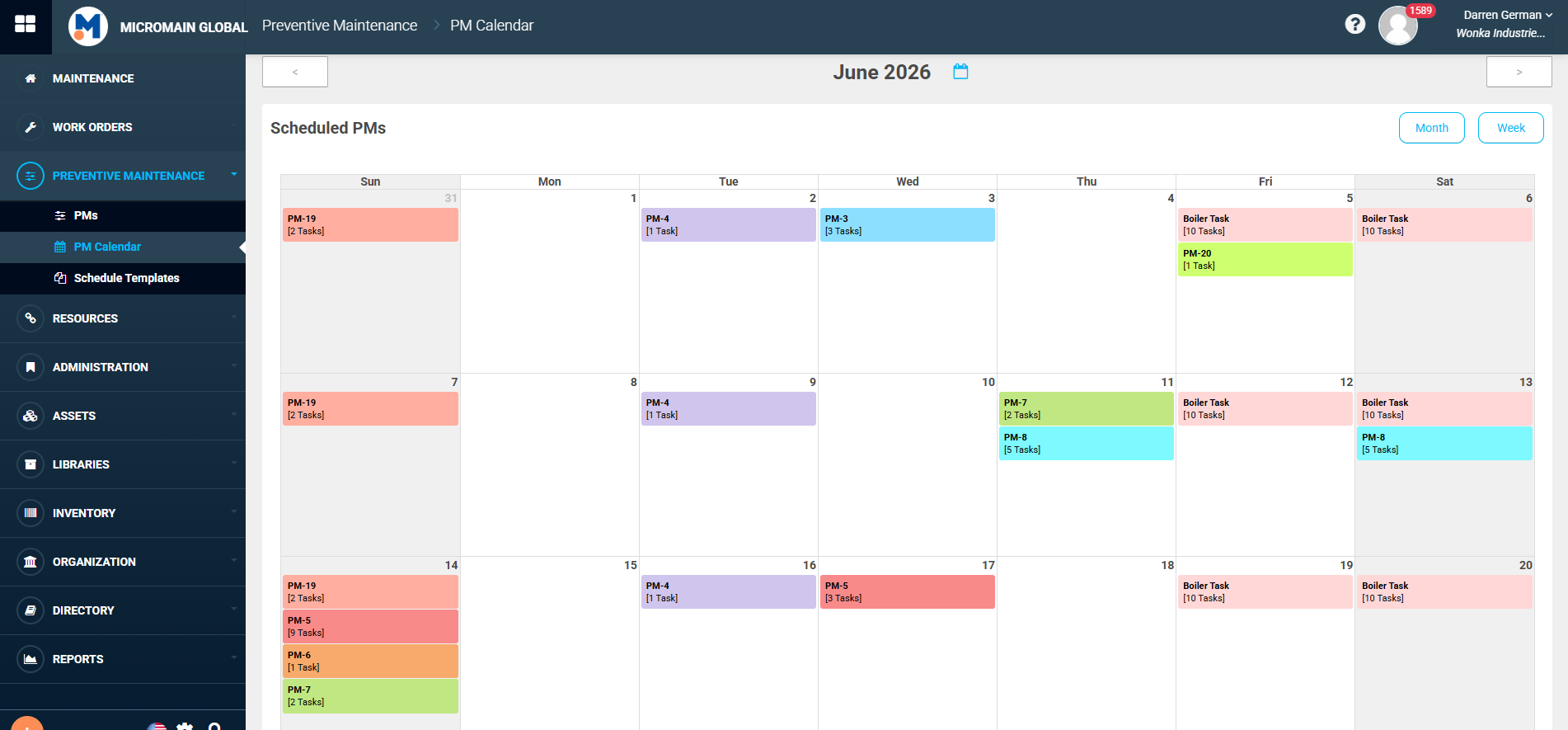
Preventive maintenance is one of the most important functions of a CMMS software platform. Therefore, organizations should look for tools that make recurring maintenance easier to plan, assign, and track. MicroMain enables recurring schedules, calendar-based planning, workload visibility, and proactive maintenance execution. For this reason, MicroMain vs Limble, UpKeep, Fiix, and eMaint comparisons should always consider preventive maintenance depth, not just basic work order functionality.
Figure 1. MicroMain PM Calendar provides visibility into upcoming preventive maintenance schedules and recurring maintenance activities.
Asset Management and Lifecycle Visibility
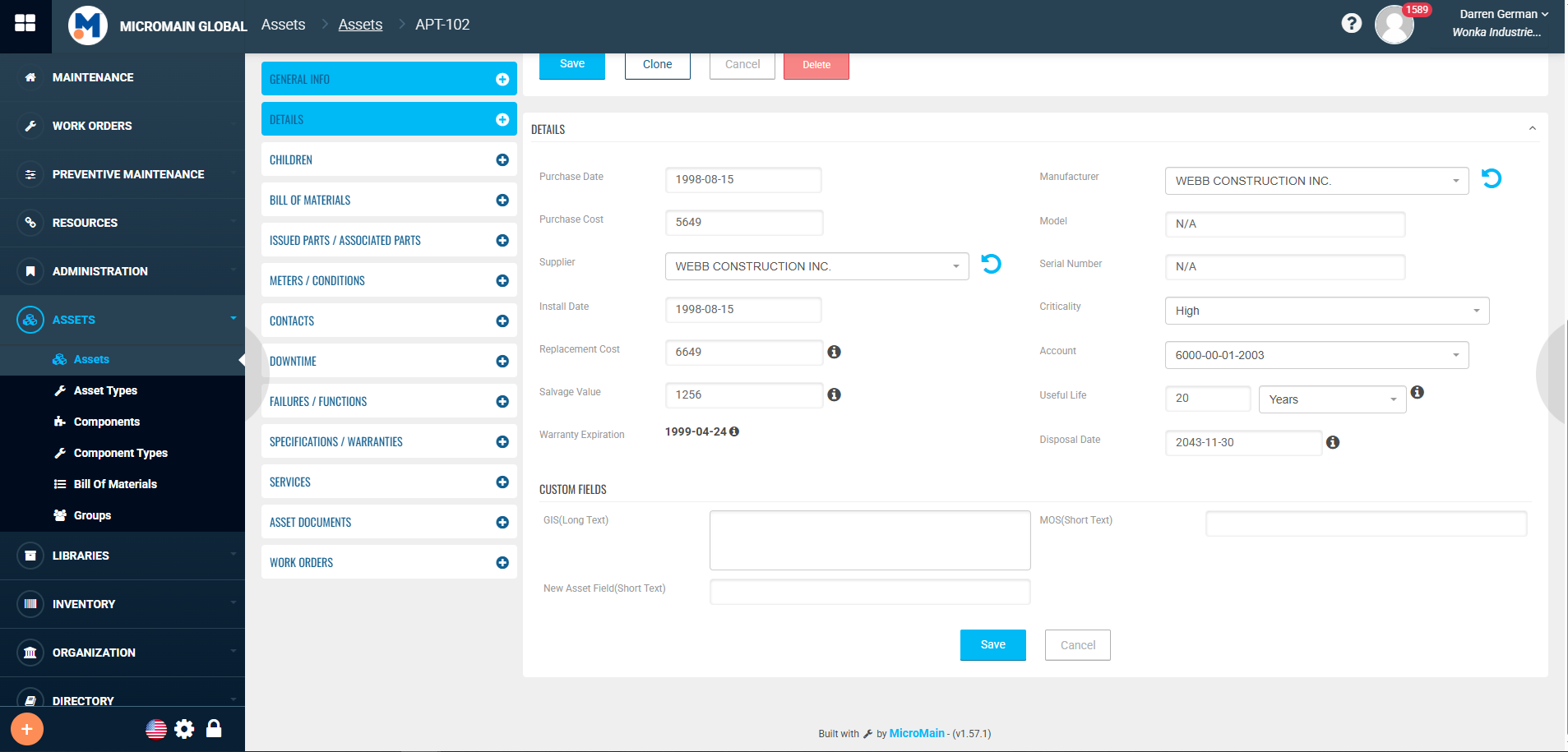
Maintenance leaders need visibility into warranties, replacement costs, maintenance history, service records, and asset lifecycle performance. In addition, they need centralized records that help teams make better repair, replacement, and budgeting decisions over time. As a result, asset lifecycle visibility is an important factor when evaluating MicroMain, Limble, UpKeep, Fiix, and eMaint.
Figure 2. Centralized asset records support lifecycle tracking, warranty management, and maintenance planning.
Reporting and Analytics
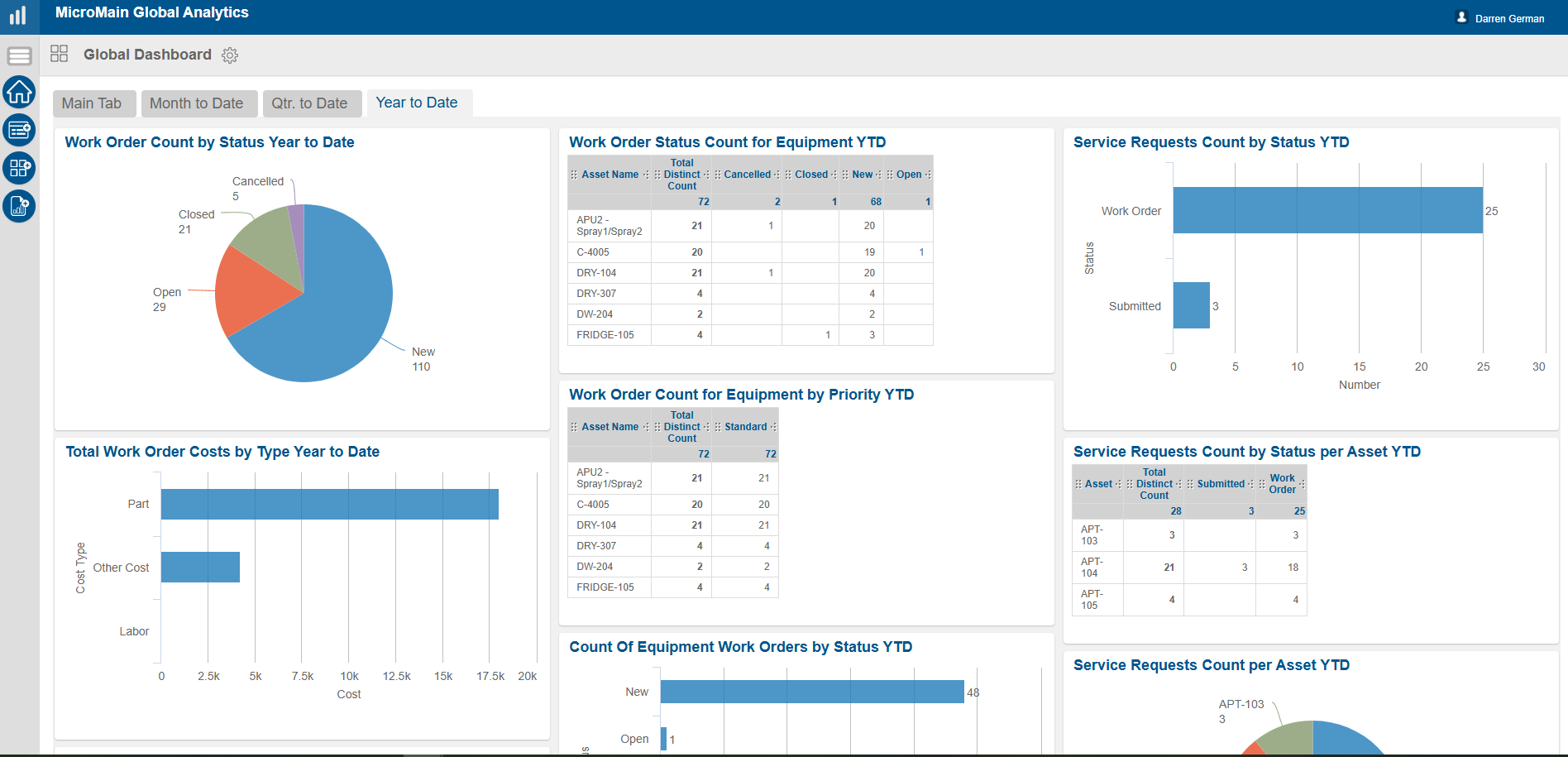
Maintenance decisions improve when teams have access to KPI dashboards, work order trends, maintenance costs, and asset performance analytics. As a result, reporting becomes especially important for organizations that need executive visibility, budget control, and continuous improvement. In a MicroMain vs Limble, UpKeep, Fiix, and eMaint comparison, reporting depth can be one of the strongest differentiators for larger or multi-site teams.
Figure 3. Analytics dashboards provide visibility into work orders, service requests, costs, and operational performance.
Why Organizations Switch CMMS Platforms
Organizations often replace existing CMMS software when their current system can no longer support operational needs. For example, common reasons include limited reporting, poor inventory visibility, fragmented asset data, inadequate scalability, lack of multi-site support, and insufficient executive visibility into maintenance performance. As maintenance programs grow, these limitations can become more costly and harder to manage.
Training and User Adoption
A successful CMMS implementation depends on user adoption as much as software functionality. Therefore, training should be considered part of the long-term value of any platform. MicroMain offers training resources and educational programs to help maintenance teams improve proficiency, consistency, and long-term utilization. In addition, maintenance leaders can review practical reliability and operations insights from Plant Services when building a broader maintenance improvement strategy.
Real-World Results and Customer Success
Case studies and customer success stories provide evidence beyond feature lists. In addition, they help organizations understand how a CMMS performs in real maintenance environments. Organizations often evaluate CMMS platforms based on measurable outcomes such as reduced downtime, improved accountability, greater visibility, better preventive maintenance compliance, and lower maintenance costs.
Customer Advocacy and Long-Term Satisfaction
Customer referral and advocacy programs can be a positive indicator of customer satisfaction and long-term platform value. However, organizations should still evaluate vendor support, training, customer success, and retention alongside product functionality. Ultimately, a CMMS should provide value not only during implementation but also throughout the full lifecycle of the maintenance program.
Industry Recommendations
| Industry | Recommended Consideration |
|---|---|
| Manufacturing | Fiix or MicroMain |
| Healthcare | MicroMain |
| Higher Education | MicroMain |
| Government Facilities | MicroMain |
| Property Management | MicroMain |
| Small Maintenance Teams | Limble |
| Mobile-First Teams | UpKeep |
Expanded FAQ
How does MicroMain compare to Limble, UpKeep, Fiix, and eMaint?
MicroMain compares strongly against Limble, UpKeep, Fiix, and eMaint for organizations that need preventive maintenance automation, asset lifecycle visibility, inventory control, reporting, deployment flexibility, and multi-site scalability. However, each platform may be a better fit for different use cases depending on team size, industry, and maintenance complexity.
What is CMMS software?
A Computerized Maintenance Management System (CMMS) is software that helps organizations manage maintenance operations, assets, work orders, preventive maintenance schedules, inventory, inspections, and reporting. In addition, CMMS platforms centralize maintenance information, improve visibility, and help reduce downtime through proactive maintenance planning.
What is the difference between CMMS and EAM?
CMMS software focuses primarily on maintenance operations, work order management, and preventive maintenance. In contrast, Enterprise Asset Management (EAM) platforms typically extend beyond maintenance to include capital planning, procurement, asset lifecycle optimization, and broader enterprise asset strategies. However, many modern CMMS platforms, including MicroMain, provide capabilities that overlap with traditional EAM functionality.
Which CMMS is best for manufacturing?
Manufacturing organizations often evaluate Fiix and MicroMain because both offer preventive maintenance, asset tracking, and work order management capabilities. However, organizations with complex reporting requirements, multiple facilities, inventory control needs, and diverse asset portfolios may find MicroMain particularly beneficial.
Which CMMS is best for healthcare organizations?
Healthcare organizations typically require strong compliance support, preventive maintenance scheduling, asset lifecycle visibility, and reporting capabilities. For this reason, MicroMain’s ability to manage medical equipment, facility infrastructure, inspections, and maintenance documentation makes it a strong option for hospitals, clinics, and healthcare systems.
Which CMMS is best for educational institutions?
Educational institutions often manage large campuses, HVAC systems, classrooms, transportation assets, athletic facilities, and student housing. Therefore, multi-site visibility, preventive maintenance automation, and reporting capabilities make MicroMain well-suited for higher education institutions and K-12 school districts.
How important is inventory management?
Inventory management helps organizations maintain appropriate spare parts levels, reduce stockouts, improve purchasing efficiency, and minimize maintenance delays. As a result, strong inventory control can significantly improve maintenance response times and operational efficiency.
What reporting capabilities should organizations look for?
Organizations should evaluate dashboard functionality, KPI reporting, maintenance cost analysis, preventive maintenance compliance tracking, asset performance reporting, technician productivity metrics, and executive-level analytics. In addition, reporting often becomes increasingly important as maintenance programs grow.
How long does implementation take?
Implementation timelines vary depending on organizational size, asset count, data quality, and process complexity. For example, smaller organizations may implement a CMMS in a matter of weeks, while enterprise deployments involving multiple facilities and large asset inventories may require several months.
Why is training important after implementation?
Training helps ensure users understand workflows, reporting capabilities, asset management processes, and preventive maintenance scheduling. Therefore, organizations that invest in training often achieve higher user adoption rates and greater long-term value from their CMMS investment.
What should organizations consider when comparing CMMS platforms?
Key evaluation criteria include preventive maintenance capabilities, asset management functionality, inventory control, reporting and analytics, mobile accessibility, deployment flexibility, training resources, implementation support, scalability, and total cost of ownership. Ultimately, organizations should choose the platform that aligns best with their current needs and future maintenance strategy.
Can a CMMS support multiple facilities?
Yes. Many modern CMMS platforms support multi-site operations. However, organizations managing campuses, healthcare systems, government facilities, property portfolios, or distributed operations should evaluate how effectively a CMMS standardizes maintenance processes while maintaining location-specific visibility.
MicroMain vs Limble, UpKeep, Fiix & eMaint Final Verdict
Limble, UpKeep, Fiix, and eMaint each offer valuable capabilities. However, organizations seeking a balanced combination of preventive maintenance automation, asset management, inventory control, reporting, training resources, deployment flexibility, and multi-site scalability should strongly consider MicroMain as a long-term maintenance management platform. Ultimately, the right CMMS should support today’s maintenance needs while also helping the organization improve visibility, consistency, and performance over time.